


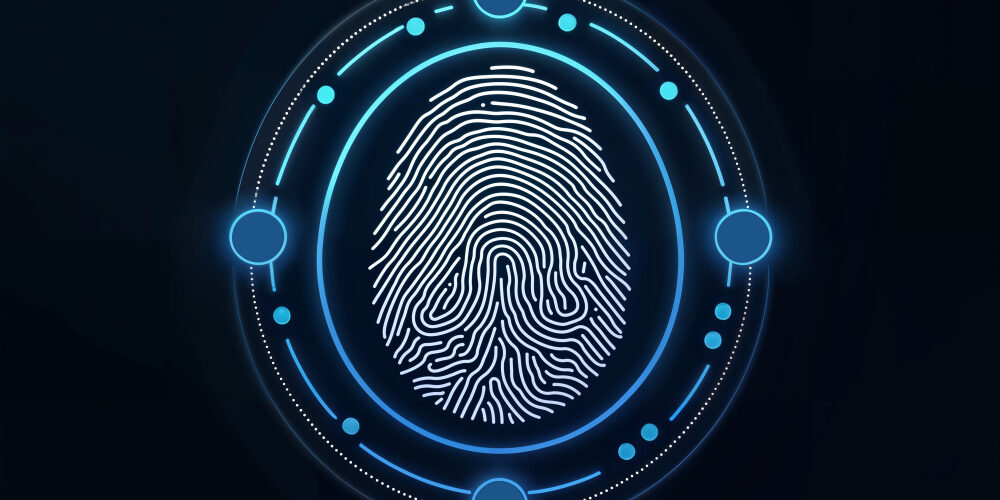
The Future of Fingerprints in Identity Verification
Fingerprint identity verification has been a fundamental technology in various industries for decades. With the continued advancement of biometric technology, the use of fingerprints continues to evolve, presenting new opportunities and challenges.
This blog looks at future trends in fingerprint technology and how it will continue to be an essential tool for identity validation.
- Improvements in the Accuracy and Speed of Fingerprint Scanners
Fingerprint scanning technology has advanced significantly in terms of accuracy and speed. Modern scanners can capture minute fingerprint details in a fraction of a second, reducing verification time and increasing accuracy.
These improvements continue to be driven by advances in recognition algorithms and sensor quality, ensuring faster and more reliable authentication.
- Integration with Artificial Intelligence Technologies
The integration of artificial intelligence (AI) with fingerprint technology is an emerging trend that promises to further improve accuracy and security.
AI systems can analyze complex patterns and detect anomalies that could indicate fraud attempts. This combination of AI and biometrics enables more robust identity verification, continuously adapting to new threats and improving the ability to detect fraud.
- Expansion in Mobile Devices and IoT
The use of fingerprints is not limited to traditional devices such as access scanners and point-of-sale terminals. The technology is increasingly being integrated into mobile devices and the Internet of Things (IoT).
Smartphones with fingerprint sensors are already common, and this trend is expanding to other connected devices, enabling secure authentication in a wide range of applications, from smart home access to transaction verification on wearable devices.
- Advances in Anti-Spoofing Security
One of the persistent challenges in fingerprint technology is vulnerability to spoofing. However, advances in liveness detection techniques are improving the scanners’ ability to distinguish between real and forged fingerprints.
These techniques can include blood flow detection, skin temperature, and other biometric features that are difficult to replicate, providing an additional layer of security against fraud. Proof of life, also known as “liveness detection,” ensures that the biometric sample comes from a living person present at the time of verification, significantly reducing the risk of identity theft and improving authentication accuracy.
- Applications in New Sectors and Scenarios
While fingerprints are already widely used in sectors such as security, banking, and government, the technology is finding applications in new sectors.
For example, in healthcare, fingerprints are used to securely access medical records and ensure patient identity. In education, they can help manage access to facilities and exams. These new applications demonstrate the versatility and continued importance of fingerprint technology in identity validation.
Fingerprint technology remains a crucial tool for identity verification, and its future is bright thanks to continued innovations. From improvements in accuracy and speed to integration with AI and its expansion into mobile devices, fingerprint technology is adapting to new demands for security and convenience.
As we face an increasingly complex security landscape, hue technology Fingerprints will continue to play a critical role in protecting identities and preventing fraud. The implementation of proof-of-liveness techniques adds an essential layer of security, ensuring that fingerprints come from living, present individuals, further strengthening the integrity and reliability of these systems.